The mainsheet traveller control line on Toketie was old, tired, and difficult to work with. It was really the sign of a bigger issue with the whole traveller system. Galvanic corrosion had set in and started doing interesting stuff.
I Have Questions
I hadn’t looked at the mainsheet traveller car in a while. I had felt some friction in the tired control line, and blissfully planned to replace the line and have a well-functioning system again. However the closer I looked, the more I noticed should be addressed. Loose & corroded components, and parts on the brink of failure stared back at me, giving me a relatively gentle lesson in maintenance and inspection of critical systems.
How long had this problem been brewing? Why hadn’t I noticed this? Why was the hardware even designed this way?
  |
|---|
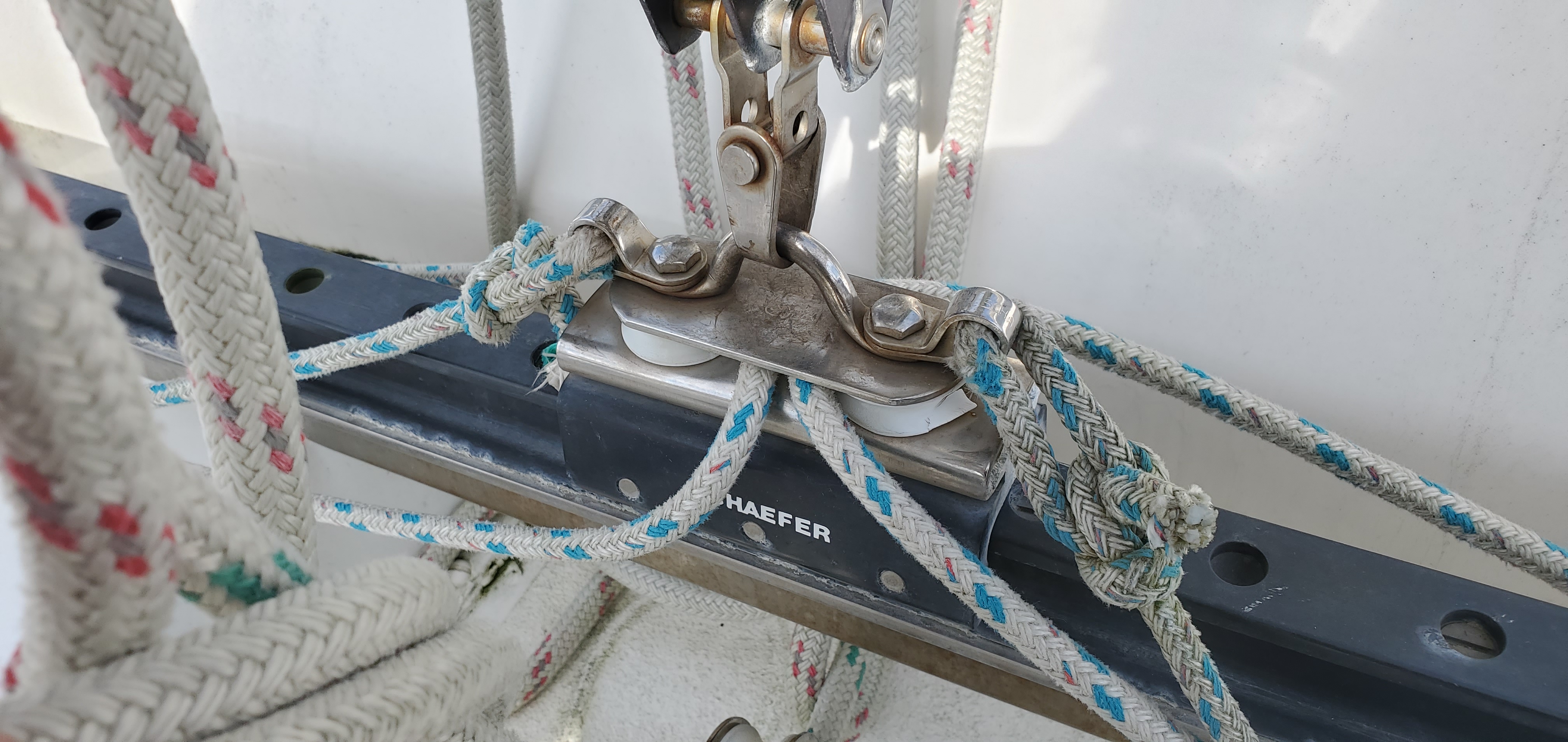
| Old 1-1/4” Schaefer Mainsheet Traveller Car |
Questionable design
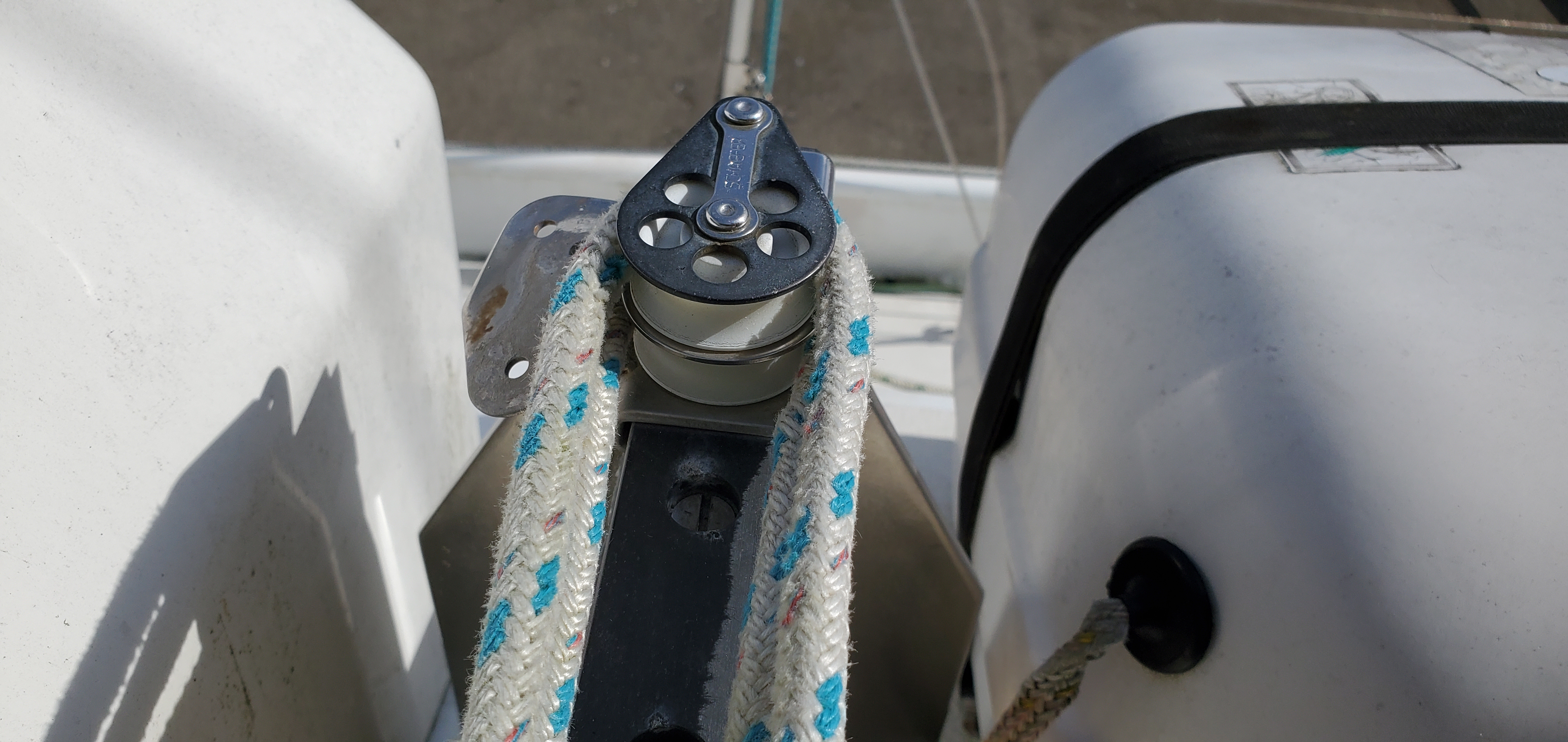
The old 1-1/4” Schaefer traveller car is made with a hardcoated (thickly anodized) aluminum extrusion for the main body. There are six wheels with stainless axles pressed into the extrusion; these roll along the main track, which is also a anodized aluminum extrusion. At the top of the traveller car, there is a formed stainless plate that wraps around the top of the cars aluminum extrusion.
I take exception to a couple aspects of this design by Schaefer, and believe these are contributing factors to the failure.
- There’s an awful lot of contact area between dissimilar metals. Granted the aluminum is hardcoated, but that’s the only defense present against catastrauphic galvanic corrosion.
- Those sharp internal corners at the top of the extrusion are not desireable. Stress concentrations hang out in those corners and love to initiate stress & fatigue-related cracks.
|
|---|
| Old -1/4” Schaefer Mainsheet Traveller Car Doesn’t look too bad at first glance |
A quick note about anodizing
Anodizing aluminum chemically transforms the outer shell of the metal to be hard and chemically resistant. It can generally be in contact with stainless steel without corroding because the anodization layer protects the aluminum inside from reacting. However as soon as any part of the thin anodization layer is compromised, the metal underneath is at risk.
Galvanic corrosion & Other Damage
 |
|---|
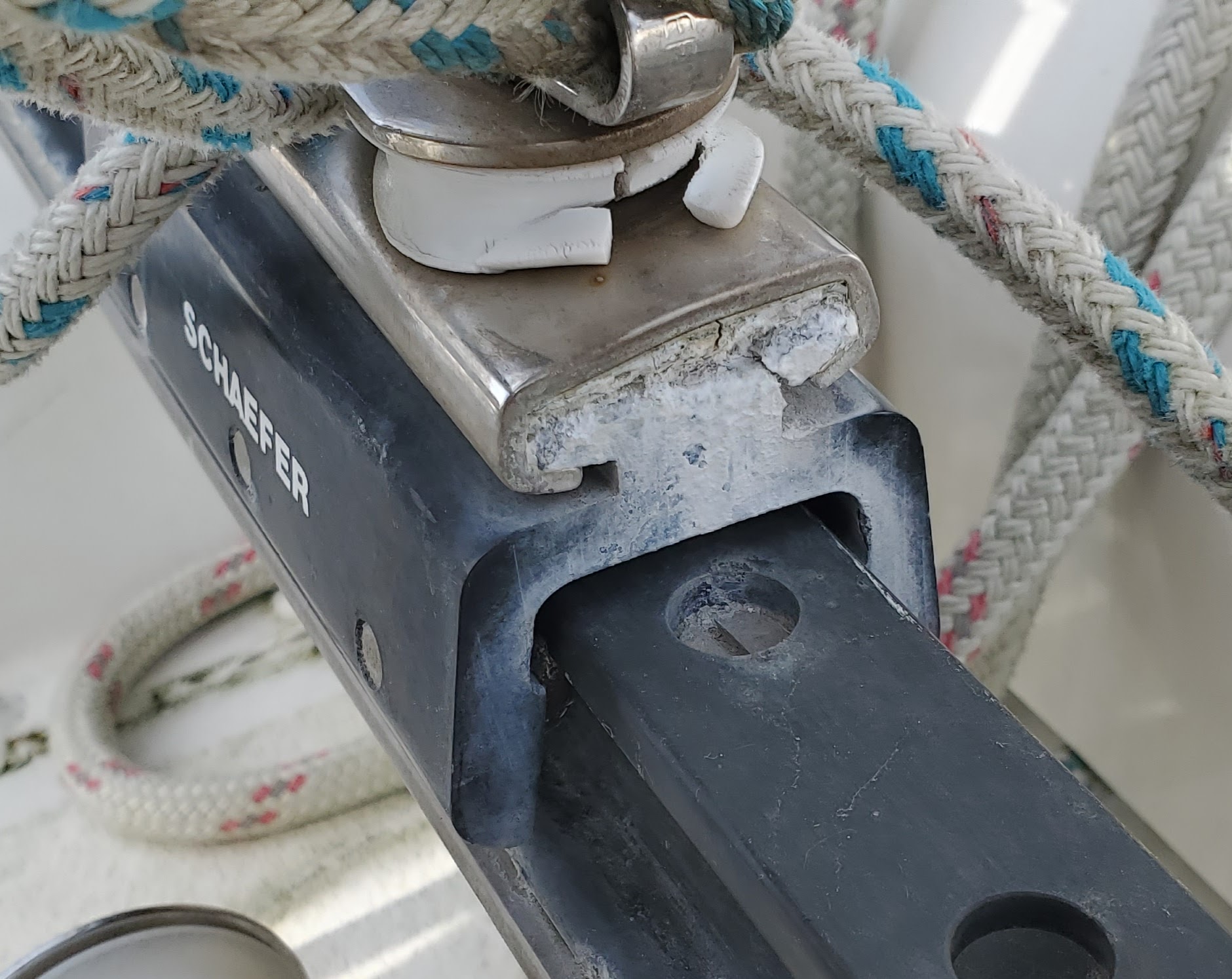
| Image of Toketie’s tired, damaged, and corroded mainsheet traveller car |
In the picture you can see that there are cracks in the upper part of the extrusion. Its likely that the sharp inside corner of the upper right part of the extrusion experienced the highest loads over its ~37 years of service. The tiny stress cracks grew in the sharp corner of the extrusion and compromised the anodized layer there. Soon after, corrosion and stress worked hand-in-hand to further disintigrate and fracture the extrusion. The aluminum, which has a much lower anodic index than stainless steel, began acting as an anode when exposed to electolyte (salt water) and the process accelerated.
The anodization may have held up if the system had been sized appropriately, however according to Schaefer’s recommendations, this track and car is undersized for the boat. This meant higher stresses on the extrusion and led to the cracks and compromised coating.
Some of the other damage was likely caused by the system being under-sized and the age of the hardware:
- plastic pulleys were cracked and deformed
- frozen bearings (likely likely a combination of its old age and the deformation in the lower mount causing additional friction and uneven wear. No wonder it was so difficult to manipulate the traveller!)
- missing cleats on outboard blocks
- bent stainless fasteners attaching outboard blocks
- bend stanless plate on outboard blocks
How best to fix?
Generally I like to pursue non-traditional solutions to problems. Knowing when to make a DIY solution vs. shelling out for a new purpose-built marine product can be difficult. I am often keen to fabricate new designs especially where there is low risk or cost of failure.
I considered doing a DIY refurbishment of the 1-1/4” traveller car so that I wouldn’t have to buy all new 1-1/2” track and hardware. This would have been reasonably cheap however since the existing car is undersized, it was a relatively clear choice to upgrade to a more appropriately sized purpose-built system.
Obsolete marine equipment
Toketie uses a 1-1/4” traveller track that Schaefer obsoleted back in 1987. They’ve streamlined their offerings to either 1-1/2” (boats up to 50ft) or 1-1/8” (boats up to 30ft).
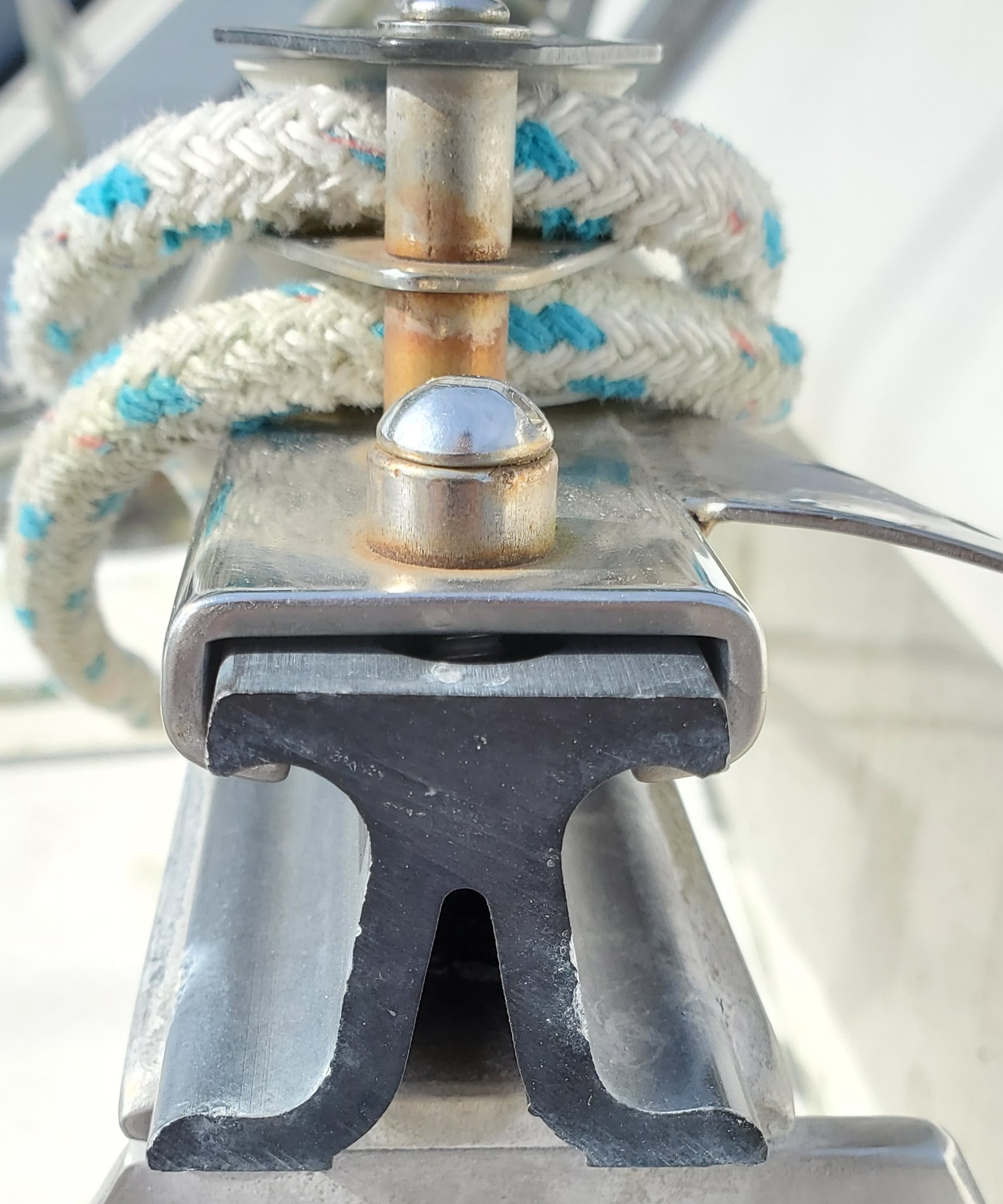
Schaefer has updated a couple aspects of their design, which makes me feel a bit better about purchasing their system again. They’ve gotten rid of the internal corners in both the track and the traveller. They’ve also greatly reduced the contact area between the stainless and aluminum parts. There is still some, but hopefully this higher-spec’d system will handle the loads better and not let any stress cracks compromise the anodization layer.
 |
|---|
| Old 1-1/4” track installed on Toketie |
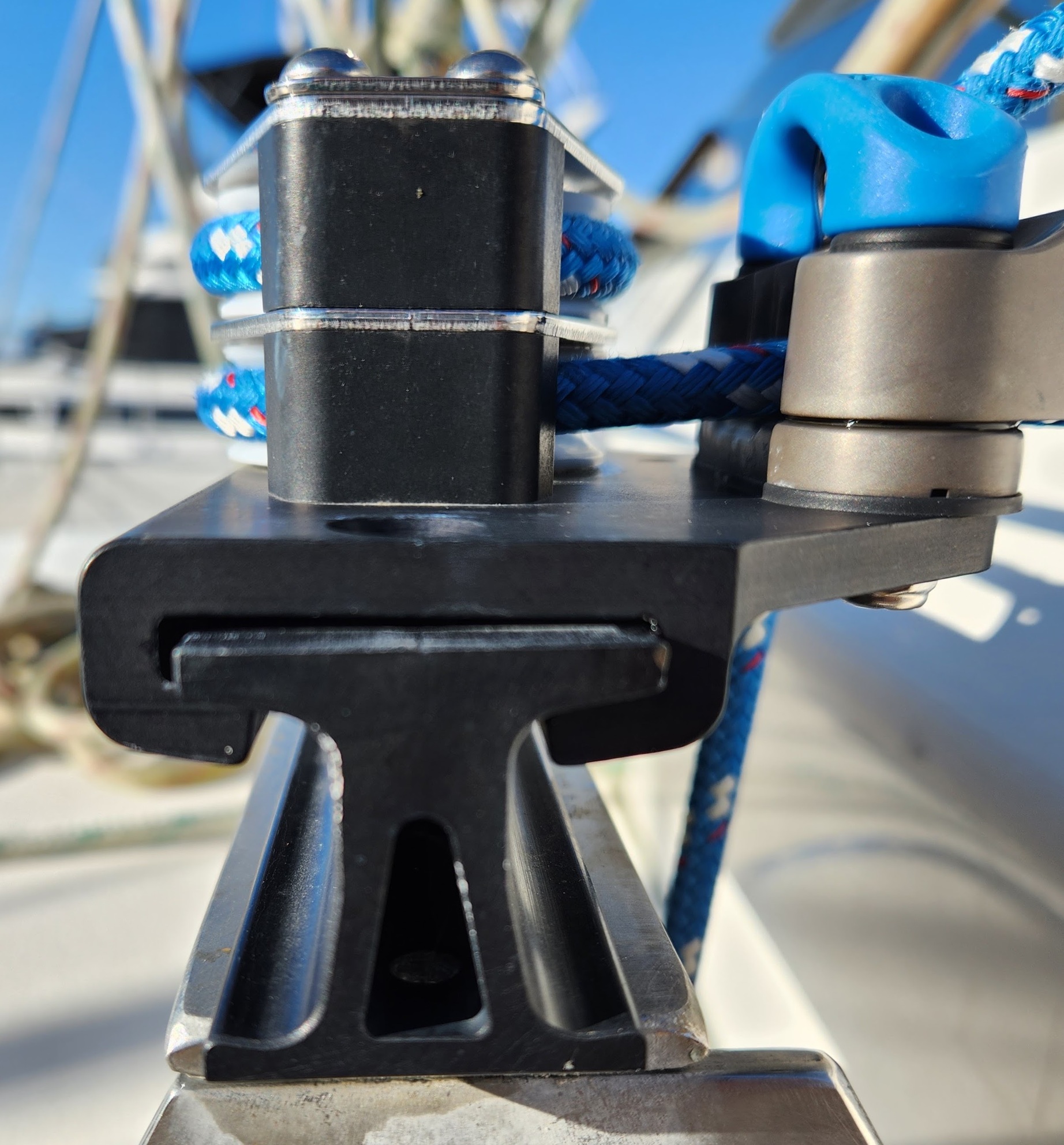 |
| New 1-1/2” track installed on Toketie |
Getting the right equipment from the internet to the boat
Marine equipment is pretty pricey. I did some searching around for price comparison and ended up being quite happy with the prices at Fisheries Supply here in Seattle. I opted to have the items ship from Shaefer with Fisheries’ next stock order to avoid the potential for UPS turning a long straight thing into something else. It was supposed to arrive in 6-7 weeks, but I actually got it in 3!
Installing new hardware
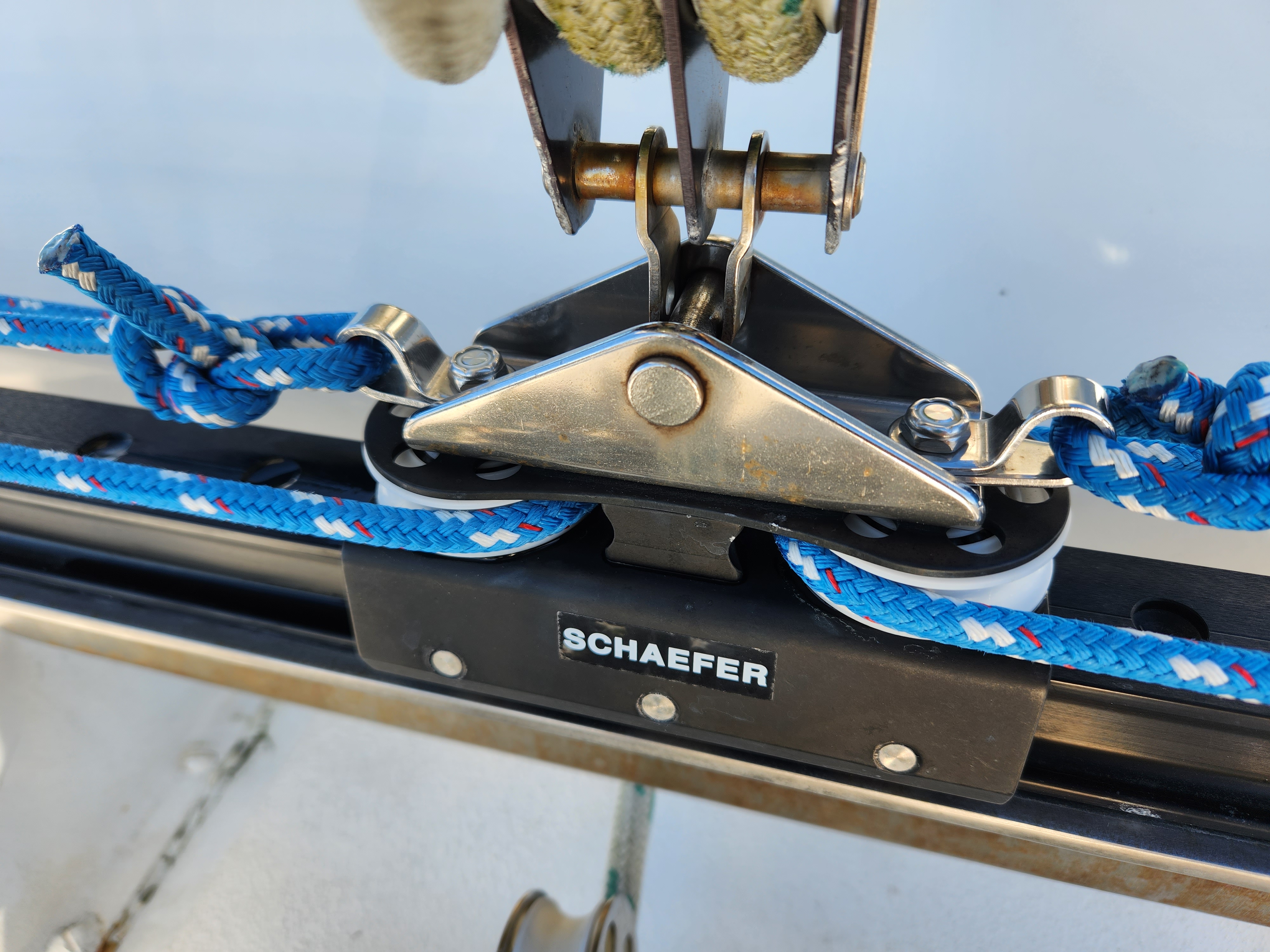
The installation went quite smoothly. I used new flat-head bolts to fit the new track, coated them with a bit of Tefgel to protect the metal, added nylon spacers between the extrusion and the stainless spanning bar, and used new locking nuts.
The new setup works great and the cam cleats are much appreciated. At some point I’d love to figure out a clever way to be able to route an ‘infinite’ line through the dodger to be able to operate the traveller from the cockpit, but that will have to wait for another time.
Oh, and I did replace the traveller line. I used sta-set double-braid here rope-link and it’s been excellent so far.
 |
|---|
| New Traveller Car installed on Toketie |